STRN6 INTERVIEW


Explore the Fascinating World of Bats: Busting Myths and Unveiling Science with Alex Viskontene
JULY 5, 2025

Could you tell us what initially drew you to study bats and their ecology back in 2018?
I’d say it happened by chance, or by fate, call it whatever you prefer. I was conducting research on monkey behavior at the zoo. However, rules for animal keeping changed, and I was obliged to shift my focus. Around that time, my colleagues had just begun a project on bat ecology and invited me to join. I hadn’t planned to study bats for long, but I quickly fell in love with them and couldn’t walk away.
How has your focus shifted from bat ecology to exploring bat-borne infections and ectoparasites? What motivated this transition?
My background is in medicine. I initially took up bat ecology as a hobby, and during this study, I realized I was far more interested in the epidemiological aspects of animal life. I became fascinated not just with the bats themselves, but also with the microorganisms and parasites that have adapted to live alongside them. The dynamics of how infections spread absolutely captivate me.
Could you describe the role of your work at the Central Research Institute of Epidemiology and how it contributes to developing new diagnostic methods for zoonotic diseases?
My main area of research at the Central Research Institute of Epidemiology is bat-borne leptospirosis. I also investigate whether bat ectoparasites could act as vectors for bacterial diseases transmissible to humans. I conduct nearly all aspects of this research myself — from capturing bats in caves, cities, and nature reserves to performing molecular analyses and writing scientific papers.
Thanks to my work, we were the first to identify bats as carriers of Leptospira in Russia. Using my data, our research team developed a new, more sensitive real-time PCR test capable of detecting both pathogenic and intermediate Leptospira species. Looking ahead, we aim to establish a genetic method for more precise identification of Leptospira serovars.
What advice would you give to aspiring researchers interested in parasitology, zoonoses, or bat ecology?
If you could live without science — don’t start it at all. There are many careers offering more money, stability, social opportunities, and the potential for fame and friendship. But if you feel unfulfilled doing anything but research, follow your true calling, and the world will open up for you.
Bats often have a mysterious and sometimes ominous presence in movies and popular culture. Why do you think bats have become such powerful symbols in society and entertainment?
That’s not the case in every culture. In China, for example, bats are symbols of happiness and good fortune. However, because bats are nocturnal creatures—most active at dusk and dawn—they fly like birds but nurse their young like mammals. This contradiction puzzled even the ancient Greeks, who regarded them as duplicitous. Today, many people still find these animals hard to understand. Humans tend to fear what they do not comprehend. Without a real reason to blame these animals yet unable to tolerate their mystery, people often invent suspicions—imagining dangers that bats might pose, simply to explain their unease.
How do you think the portrayal of bats in movies and media influences public perception of these animals, both positively and negatively?
Most portrayals in media are misleading, blending facts with fears and misconceptions. For example, when the media reports on bat-associated diseases, the impact can be unpredictable. Some people may come away thinking that bats should be exterminated like pests, while others might learn the importance of wearing gloves when handling a bat or avoiding disturbance during hibernation. Well-made documentaries and articles can help educate the public about bats and their ecological value. Ultimately, the influence depends on what people are exposed to and how critically they evaluate it.
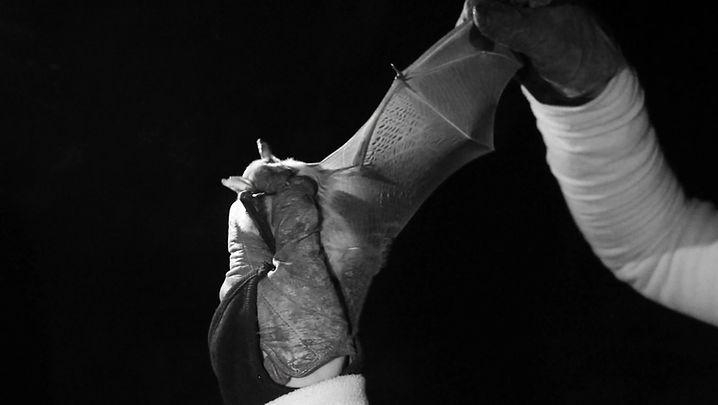


Bats are frequently associated with themes like darkness and the supernatural. In your opinion, how does this cultural symbolism impact conservation efforts or scientific interest in bats?
Do you think that the fascination with bats in society—such as their appearance in horror stories or popular culture—offers a unique opportunity for education and engagement? If so, how?
On one hand, cultural symbolism increases fear: some people try to kill a bat whenever they see one. On the other hand, when night creatures gain attention through popular culture, it often sparks curiosity. Whatever popular culture says about bats, it raises awareness of them and makes them visible to those who might never pay attention in the evenings. Soon, people begin to wonder about bats’ lives — and that’s where non-fiction lectures and articles can really make a difference. Moreover, fighting against suspicion can be as satisfying to society as the suspicions themselves. In a way, the mystery surrounding bats keeps them in the public conversation, which can, in turn, support their conservation.
Besides that, personally, I love the dark and gothic aesthetic. That’s not what initially led me to study bats. Still, I can imagine that some volunteers or future scientists might be inspired to learn more about Chiroptera after watching Nosferatu or reading Dracula.
Are there any particular movies, music, or literature that you believe have helped reshape the image of bats in society? How do these depictions compare to scientific reality?
There’s one book that comes to mind, though, to my knowledge, it’s never been translated from Russian. It’s called В поисках летучих мышей (In Search of Bats), and it’s written by Petr Strelkov, one of Russia’s foremost bat researchers. It’s a collection of fieldwork memories, and everything in it is as scientifically accurate as a narrative can be.
As for films, I’ve never seen a popular one that presents bats as they really are. Still, some vampire movies depict social behaviors that, in some ways, echo those of real-life vampire bats. You see, real vampire bats (genus Desmodus) have strong social relationships, especially within family groups: they recognize each other, form “friendships,” and even share food — similar to characters in Only Lovers Left Alive (2013), Byzantium (2012), or even Twilight (2008).
Some of my colleagues enjoy Hotel Transylvania, though I haven’t seen it myself.
What devices are good for listening to bats in various outdoor areas?
The standard device for detecting and recording bat calls is known as a bat detector. I personally prefer the Batlogger M2 by Elekon. Some of my colleagues find the D1000X Ultrasound Detector by Pettersson Elektronik more convenient.
How has the association of blood with certain bats (vampire bats) affected public perceptions and fears about bats in general?
Fortunately, I’ve met very few people who genuinely believe that all bats drink blood. However, many still think that vampire bats prefer human blood—which is a complete misconception. Overall, vampire bats do not significantly increase fear of bats in Europe or Russia, but for some, it’s just another reason to see them as dangerous or harmful.
What are the primary types of food that different bat species consume, and how do their diets vary across regions?
Almost all Palearctic bats are insectivorous, with one notable exception: Rousettus aegyptiacus, which prefers fruit. Globally, however, bats display remarkable dietary diversity. Depending on the species and region, bats may feed on insects and other arthropods, small vertebrates, fruit, nectar, blood, and even fish. What unites all bats is their preference for high-calorie food, as flight is an extremely energy-demanding activity. This is why you’ll never find a bat feeding on leaves or grass — herbivorous bats always go for the most energy-rich parts of plants, such as fruit or nectar.
In regions with high bat species diversity, such as the tropics, competition drives dietary specialization. That’s why tropical ecosystems host the widest range of bat feeding strategies. Some bats—such as Desmodus (common vampire bats), Noctilio (fishing bats), and Macroglossus (nectar-feeding bats)—are highly specialized in their food preferences. Desmodus and Noctilio inhabit Central and South America, while Macroglossus is found in Indonesia and Southeast Asia. Even in the Palearctic, some insectivorous bats show dietary flexibility: Myotis species can occasionally feed on fish, while Nyctalus lasiopterus is large enough to prey on migrating songbirds.


Credits:
Photography and videos (b/w): Selezneva Marina
Interview: Malcolm Roxs